If you are looking for a simple, safe and completely free way to enjoy movies and series on your cell phone, tablet or TV, Tubi – Free Movies and Series stands out as one of the best options available in 2026 . With an impressive collection, a clean interface, and support for Portuguese subtitles, the app offers access to thousands of titles free of charge. And best of all, it's available for direct download from the official stores:

Tubi: Free Movies & Live TV
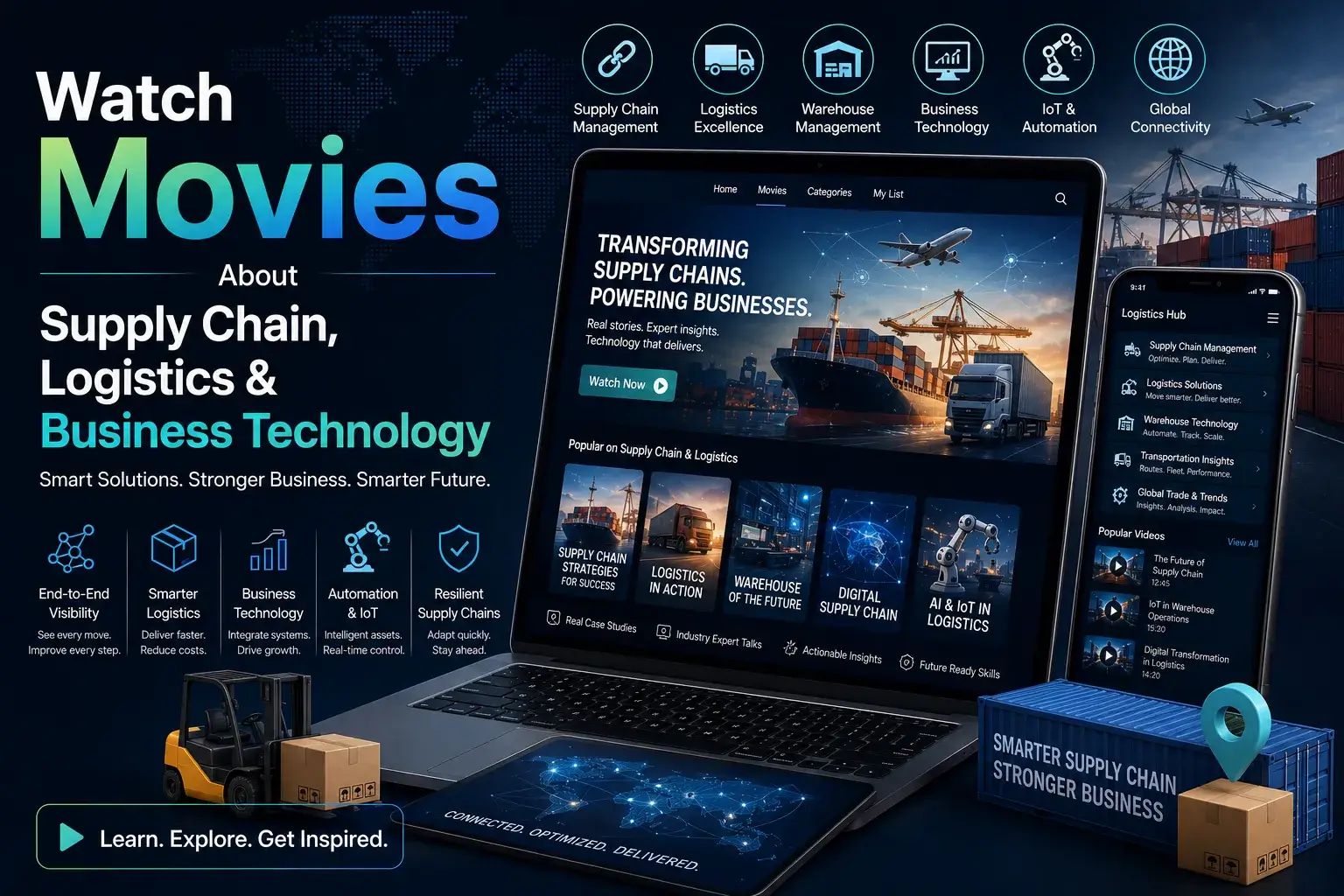
Watch Movies About Supply Chain, Logistics & Business Technology
Every product, service and business operation depends on a complex network of suppliers, manufacturers, warehouses, transportation providers, technology platforms and customers. Supply chain management and logistics technology connect these activities and help organizations move materials, products, information and money efficiently across increasingly global markets.
This collection of supply chain movies, logistics documentaries and business technology videos explores the systems behind modern commerce. Discover educational content covering inventory management, procurement software, warehouse technology, transportation management, supply chain analytics, demand planning, automation, artificial intelligence and digital supply chain transformation.
Modern supply chains are no longer managed only through spreadsheets and manual processes. Cloud software, real-time data, predictive analytics, robotics, artificial intelligence and connected enterprise systems are changing how companies forecast demand, purchase materials, manage inventory, operate warehouses and deliver products.
What Is Supply Chain Management?
Supply chain management is the coordinated management of activities involved in sourcing materials, producing goods, storing inventory, transporting products and fulfilling customer demand.
A supply chain can include suppliers, manufacturers, distributors, logistics providers, warehouses, retailers and customers.
Effective supply chain management aims to balance availability, service levels, operating costs, inventory investment and business risk.
What Is Logistics?
Logistics focuses on the movement and storage of goods, materials and related information.
Logistics activities can include transportation planning, warehousing, order fulfillment, inventory movement, freight management and last-mile delivery.
Modern logistics increasingly relies on specialized software and real-time information to coordinate complex operations.
Supply Chain vs. Logistics
Logistics is an important part of supply chain management, but supply chain management covers a broader business network.
Supply chain management can include procurement, supplier relationships, demand planning, manufacturing, inventory strategy, logistics, distribution and customer fulfillment.
| Area | Primary Focus | Examples |
|---|---|---|
| Procurement | Obtaining goods and services | Sourcing, supplier management and purchasing |
| Planning | Matching supply with demand | Forecasting and inventory planning |
| Warehousing | Storage and fulfillment | Receiving, picking, packing and shipping |
| Transportation | Moving goods | Freight, routing and delivery |
| Analytics | Understanding performance | KPIs, forecasting and optimization |
| Automation | Reducing manual processes | Robotics, workflow automation and AI |
The Modern Supply Chain
Global supply chains can span multiple countries and involve thousands of suppliers and logistics partners.
Companies must coordinate purchasing, production, inventory, transportation and customer demand while responding to changing market conditions.
This complexity has increased demand for enterprise supply chain software and digital planning tools.
Supply Chain Technology
Supply chain technology includes software, data platforms, automation systems and connected devices used to improve supply chain operations.
Common technologies include supply chain planning software, warehouse management systems, transportation management systems, procurement platforms, inventory management software, analytics platforms, IoT sensors and artificial intelligence.
Enterprise Supply Chain Software
Enterprise supply chain platforms can connect procurement, inventory, planning, logistics and financial processes.
Integration with ERP, CRM, warehouse and transportation systems can provide organizations with a more complete view of business operations.
Cloud Supply Chain Technology
Cloud-based supply chain software allows organizations to access applications and data through scalable computing infrastructure.
Cloud platforms can simplify collaboration between corporate teams, suppliers and logistics partners while supporting centralized analytics.
Cloud supply chain systems can also reduce the need for organizations to maintain every component of their technology infrastructure themselves.
Digital Supply Chain
A digital supply chain uses connected technologies and data to improve visibility, planning and operational coordination.
Digital transformation can replace disconnected spreadsheets and manual processes with integrated workflows and real-time information.
Supply Chain Visibility
Supply chain visibility means having timely information about inventory, orders, shipments, suppliers and other important events.
Greater visibility can help companies identify delays, shortages and potential disruptions earlier.
Real-time visibility is especially valuable when supply chains contain multiple transportation providers and geographic regions.
Inventory Management
Inventory management involves controlling the quantity, location and movement of products and materials.
Businesses need enough inventory to meet customer demand while avoiding excessive inventory carrying costs.
Inventory software can provide information about stock levels, purchase orders, sales, warehouse movements and replenishment requirements.
Inventory Optimization
Inventory optimization seeks to balance product availability with inventory investment.
Organizations can use demand forecasts, lead times, service-level requirements and historical demand patterns to determine appropriate inventory policies.
Inventory Forecasting
Inventory forecasting estimates future stock requirements.
Forecasts can consider historical sales, seasonality, promotions, market trends, supplier lead times and other variables.
Better forecasting can help reduce both stockouts and unnecessary inventory accumulation.
Safety Stock
Safety stock provides additional inventory intended to protect against demand variability or supply delays.
Inventory planning systems can help organizations determine appropriate safety-stock levels based on demand patterns and service objectives.
Demand Planning
Demand planning estimates future customer requirements and helps organizations prepare inventory and production accordingly.
Demand planning is particularly important for businesses with seasonal demand, long supplier lead times or large product portfolios.
Demand Forecasting
Demand forecasting can use statistical models, historical information and machine learning to estimate future demand.
AI-powered forecasting systems can evaluate large datasets and identify patterns that may be difficult to analyze manually.
Supply Chain Planning
Supply chain planning connects demand forecasts with purchasing, production, inventory and logistics decisions.
Planning systems can evaluate different scenarios and help businesses prepare for changing demand and supply conditions.
Procurement Technology
Procurement technology helps organizations manage the purchasing of goods and services.
Procurement platforms can support supplier discovery, sourcing, purchase orders, approvals, contract processes and spend analysis.
Procurement Software
Modern procurement software can automate repetitive purchasing workflows.
Organizations can establish approval policies, manage purchase requests, monitor supplier performance and analyze spending through centralized systems.
Digital Procurement
Digital procurement replaces manual purchasing processes with electronic workflows and connected supplier systems.
Digital procurement can improve process visibility and make it easier for organizations to monitor purchasing activity.
E-Procurement
Electronic procurement, commonly called e-procurement, allows organizations to manage purchasing activities electronically.
These systems can support requisitions, purchase orders, supplier catalogs, approvals and procurement reporting.
Strategic Sourcing
Strategic sourcing evaluates suppliers, pricing, quality, risk and long-term purchasing requirements.
Analytics can help procurement teams compare suppliers and understand spending patterns.
Spend Management
Spend management focuses on understanding and controlling organizational spending.
Procurement analytics can identify purchasing categories, supplier concentration, contract compliance and potential opportunities for improving procurement efficiency.
Supplier Management
Supplier management involves monitoring supplier relationships, contracts, performance and risk.
Digital supplier management platforms can centralize information and make collaboration easier.
Supplier Risk Management
Supply chain disruptions can originate from supplier financial problems, capacity limitations, geopolitical events, natural disasters or operational failures.
Supplier risk management helps organizations identify vulnerabilities and develop mitigation strategies.
Warehouse Management
Warehouse management coordinates the receiving, storage, picking, packing and shipping of products.
Modern warehouses increasingly use warehouse management software, barcode scanning, mobile devices, robotics and automated material handling.
Warehouse Management Systems
A Warehouse Management System (WMS) helps organizations control warehouse inventory and operational processes.
WMS platforms can manage receiving, put-away, picking, packing, inventory locations, cycle counting and shipping.
Warehouse Automation
Warehouse automation uses technology to reduce manual work and improve operational efficiency.
Automation can include conveyor systems, automated storage and retrieval systems, sorting equipment, robotic picking systems and autonomous mobile robots.
Warehouse Robotics
Robotic technology is increasingly used in warehouses for material movement, picking, sorting and other repetitive activities.
Robotics can help organizations operate high-volume fulfillment environments while supporting employees with physically demanding tasks.
Autonomous Mobile Robots
Autonomous Mobile Robots (AMRs) can navigate warehouse environments and transport goods or materials.
AMRs can work alongside human operators and can be integrated with warehouse management systems.
Transportation Management
Transportation management involves planning and controlling the movement of products.
Transportation management systems can help companies select carriers, plan shipments, optimize routes and monitor transportation costs.
Transportation Management Systems
A Transportation Management System (TMS) is software designed to manage transportation activities.
TMS platforms can support carrier management, freight planning, shipment execution, tracking, billing and transportation analytics.
Freight Management
Freight management involves coordinating the transportation of goods between suppliers, warehouses, distribution centers and customers.
Digital freight platforms can improve shipment visibility and help companies analyze transportation costs.
Route Optimization
Route optimization uses algorithms and operational constraints to determine efficient transportation routes.
Modern systems can consider distance, delivery windows, vehicle capacity, traffic conditions and other factors.
Last-Mile Delivery
The final stage of delivery can be one of the most complex and expensive parts of logistics.
Last-mile delivery technology helps organizations manage routes, delivery schedules, drivers, customer notifications and proof of delivery.
Delivery Management Software
Delivery management platforms can provide real-time shipment information and help businesses coordinate drivers and customer deliveries.
These systems can be especially valuable for ecommerce, retail, field service and distribution operations.
Ecommerce Logistics
The growth of ecommerce has increased demand for sophisticated fulfillment and logistics technology.
Customers increasingly expect accurate inventory information, fast shipping and real-time delivery updates.
Technology helps ecommerce companies coordinate orders, warehouses, carriers and customer communication.
Omnichannel Fulfillment
Omnichannel fulfillment coordinates inventory and orders across multiple sales channels.
A retailer may need to fulfill orders through stores, distribution centers and ecommerce warehouses while maintaining accurate inventory information.
Order Management
Order management systems help organizations manage customer orders from creation through fulfillment.
They can connect ecommerce platforms, inventory systems, warehouses, transportation providers and customer service teams.
Reverse Logistics
Reverse logistics manages the movement of products from customers back to businesses.
Returns management can include transportation, inspection, refurbishment, resale, recycling or disposal.
Cold Chain Logistics
Cold chain logistics involves maintaining controlled temperatures during the storage and transportation of temperature-sensitive products.
Connected sensors and monitoring systems can provide information about environmental conditions during transportation.
Global Logistics
International supply chains involve transportation across borders, multiple carriers, customs processes and different regulatory environments.
Global logistics technology can provide shipment visibility and help organizations coordinate international transportation.
Supply Chain Analytics
Supply chain analytics transforms operational data into insights about inventory, procurement, logistics and demand.
Analytics can help identify bottlenecks, cost drivers, supplier risks and opportunities for operational improvement.
Supply Chain Analytics Software
Supply chain analytics software can consolidate information from ERP, WMS, TMS, procurement and planning systems.
Dashboards can provide KPIs for inventory turnover, order fulfillment, supplier performance, transportation costs and forecast accuracy.
Warehouse Analytics
Warehouse analytics can evaluate picking productivity, inventory accuracy, order cycle times, storage utilization and fulfillment performance.
These metrics can help managers identify operational bottlenecks.
Transportation Analytics
Transportation analytics can measure freight spending, carrier performance, delivery times, route efficiency and shipment reliability.
Organizations can use these insights to improve transportation planning and supplier relationships.
Procurement Analytics
Procurement analytics provides visibility into purchasing patterns and supplier spending.
It can help identify opportunities for strategic sourcing, contract compliance and supplier consolidation.
Supply Chain KPIs
Key performance indicators help organizations monitor supply chain performance.
| KPI | What It Measures |
|---|---|
| Inventory Turnover | How frequently inventory is sold or consumed |
| Order Fulfillment Rate | Ability to fulfill customer orders successfully |
| On-Time Delivery | Delivery performance against promised dates |
| Forecast Accuracy | How closely forecasts match actual demand |
| Supplier Performance | Supplier reliability, quality and service |
| Transportation Cost | Cost associated with moving goods |
| Inventory Accuracy | Agreement between system and physical inventory |
Artificial Intelligence in Supply Chain
Artificial intelligence in supply chain management can support forecasting, optimization, anomaly detection and decision support.
AI systems can process large datasets from sales, inventory, suppliers, transportation and external market signals.
Machine Learning in Supply Chain
Machine learning models can identify patterns in historical supply chain data.
Applications include demand forecasting, inventory optimization, predictive maintenance, route optimization and supplier risk analysis.
AI Demand Forecasting
AI-powered forecasting can evaluate multiple variables when estimating future demand.
Potential inputs can include historical sales, seasonality, promotions, pricing, regional trends and product relationships.
Predictive Supply Chain Analytics
Predictive analytics can help organizations anticipate potential supply chain events.
Examples include expected demand changes, supplier delays, inventory shortages and transportation disruptions.
Supply Chain Automation
Supply chain automation uses software and physical technology to reduce repetitive manual work.
Automation can exist in procurement, warehouse operations, transportation planning, inventory management and reporting.
Intelligent Automation
Intelligent automation combines workflow automation with AI and analytics.
For example, a system may identify an inventory exception, evaluate demand information and recommend a replenishment action.
Real-Time Supply Chain Monitoring
Real-time monitoring uses connected systems to track orders, inventory, shipments and operational events.
Organizations can create alerts when important thresholds or unusual conditions occur.
Internet of Things in Logistics
IoT devices can provide information about location, temperature, equipment condition and other operational variables.
Connected sensors can improve visibility across transportation and warehouse environments.
Digital Twins in Supply Chain
A digital twin is a digital representation of a physical process, asset or environment.
Supply chain digital twins can be used to model scenarios and evaluate potential operational changes.
Supply Chain Simulation
Simulation allows organizations to evaluate potential supply chain scenarios before implementing changes in real operations.
Companies can test changes to inventory policies, warehouse capacity, transportation networks and supplier strategies.
Supply Chain Resilience
Supply chain resilience refers to an organization's ability to prepare for disruptions, respond effectively and recover operations.
Resilience strategies can include supplier diversification, safety stock, alternative transportation options and improved visibility.
Supply Chain Risk Management
Supply chain risk management identifies potential threats to sourcing, production, logistics and customer fulfillment.
Analytics can help organizations prioritize risks according to potential impact and probability.
Geopolitical Supply Chain Risk
International supply chains can be affected by geopolitical developments, trade policies, transportation restrictions and regional disruptions.
Organizations can use scenario planning and supplier diversification to prepare for uncertainty.
Supply Chain Finance
Supply chain finance connects financial services with commercial supply chain relationships.
Technology can support supplier payments, invoice processing, working capital management and financing programs.
Working Capital Management
Inventory, supplier payment terms and customer receivables all influence working capital.
Analytics can help finance and supply chain teams understand how operational decisions affect cash requirements.
Accounts Payable Automation
Accounts payable automation can digitize invoice capture, matching, approvals and payment workflows.
Connecting procurement, invoices and supplier information can improve financial visibility across the purchasing process.
Supply Chain and ERP
Enterprise Resource Planning (ERP) systems can connect supply chain activities with finance, procurement, inventory and other business functions.
Integration can create a centralized view of transactions and operational information.
ERP Supply Chain Modules
Enterprise software can provide modules for procurement, inventory, manufacturing, order management, logistics and financial management.
Integrated systems can reduce information silos and support cross-functional planning.
Supply Chain Cybersecurity
Modern supply chains depend heavily on digital systems, making cybersecurity increasingly important.
Organizations need to consider security across enterprise applications, suppliers, logistics partners, cloud systems and connected devices.
Third-Party Technology Risk
Supply chain technology frequently involves external vendors and service providers.
Organizations should evaluate the security, reliability and compliance practices of critical technology partners.
Supply Chain Compliance
Supply chain operations can be subject to industry, customs, financial, environmental and product regulations.
Digital compliance systems can help organizations maintain records and monitor relevant processes.
Sustainable Supply Chains
Organizations increasingly evaluate environmental and social factors across supply chains.
Supply chain analytics can help companies measure transportation emissions, energy usage, waste and other sustainability indicators.
Carbon Tracking
Digital systems can help organizations estimate and monitor emissions associated with transportation, production and other supply chain activities.
Better data can support sustainability reporting and operational improvement programs.
Why Supply Chain Technology Matters
Supply chains influence customer experience, operating costs, working capital and business resilience.
Technology can improve visibility and coordination, but successful transformation also requires strong processes, skilled employees and appropriate change management.
Common Challenges in Supply Chain Digital Transformation
- Legacy enterprise systems
- Disconnected data sources
- Poor data quality
- Limited supply chain visibility
- Complex supplier networks
- Integration challenges
- Cybersecurity risks
- Change management requirements
- Technology implementation costs
- Insufficient analytical skills
Building a Digital Supply Chain
A successful digital supply chain transformation generally begins with clearly defined business objectives.
Organizations can identify important processes, establish data requirements, evaluate technology platforms and prioritize high-value automation opportunities.
Data governance and integration should be considered early because analytics and AI depend on reliable information.
The Role of Business Intelligence
Business intelligence platforms can provide executives and operational teams with a unified view of supply chain performance.
Dashboards can combine inventory, procurement, transportation and demand information to help identify emerging problems.
Supply Chain Control Towers
A supply chain control tower provides centralized visibility into important supply chain activities.
Control tower systems can combine data from multiple sources and provide alerts, analytics and workflow capabilities.
Predictive Supply Chain Control
Advanced control tower environments can incorporate predictive analytics to identify potential disruptions before they become major operational problems.
AI can help prioritize events based on potential business impact.
Autonomous Supply Chains
An emerging concept is the autonomous supply chain, where software can continuously monitor conditions and recommend or execute approved decisions.
Complete autonomy is not appropriate for every business process. High-impact decisions may require human review and clear governance.
The Future of Logistics Technology
Logistics technology is moving toward greater automation, visibility and intelligence.
Cloud platforms, IoT, robotics, predictive analytics and AI are increasingly connected to transportation and warehouse operations.
The Future of Warehouse Automation
Warehouses are likely to use more robotics, automated storage, computer vision and intelligent orchestration.
Human workers may increasingly focus on exception handling, supervision, maintenance and tasks that require flexible judgment.
The Future of Procurement
Procurement platforms are becoming more data-driven and automated.
AI can assist with supplier discovery, spend classification, contract analysis, purchasing recommendations and risk monitoring.
The Future of Supply Chain Analytics
Analytics will increasingly move from historical reporting toward predictive and prescriptive decision support.
Organizations will seek systems that not only explain what happened but also identify what may happen next and what actions could improve outcomes.
The Future of AI in Supply Chain
Generative AI and AI agents may increasingly support supply chain professionals by summarizing operational information, investigating exceptions and assisting with planning workflows.
Organizations should establish access controls, auditability and human oversight before allowing AI systems to perform consequential operational actions.
Why Watch Supply Chain Documentaries?
Supply chain documentaries can provide a practical way to understand the invisible infrastructure behind modern commerce.
Viewers can explore how raw materials become finished products, how warehouses coordinate millions of items and how transportation networks connect businesses and consumers.
Technology-focused documentaries also show how software, robotics and analytics are changing traditional logistics operations.
Who Should Watch Supply Chain and Logistics Movies?
This content can be useful for supply chain professionals, procurement managers, logistics executives, warehouse managers, operations leaders, business owners, technology professionals, students and anyone interested in modern commerce.
It can also provide useful background for people exploring careers in procurement, logistics, operations management, supply chain analytics and enterprise technology.
Topics to Explore
| Topic | What You Can Learn |
|---|---|
| Supply Chain Management | How global business networks coordinate supply and demand |
| Procurement | How organizations source goods and manage suppliers |
| Inventory | How businesses balance stock availability and cost |
| Warehousing | How modern distribution centers operate |
| Transportation | How goods move through global logistics networks |
| Analytics | How data supports supply chain decisions |
| Artificial Intelligence | How AI supports forecasting and optimization |
| Automation | How robotics and software reduce manual processes |
| Digital Transformation | How technology modernizes traditional supply chains |
How to Learn Supply Chain Technology Through Movies
Start with foundational documentaries about supply chain management and logistics.
Next, explore specialized topics such as inventory management, procurement, warehouse operations and transportation technology.
For viewers interested in emerging technology, continue into supply chain analytics, artificial intelligence, robotics, digital twins and autonomous operations.
From Physical Products to Digital Intelligence
The supply chain has traditionally been associated with physical goods. Today, digital information is equally important.
Every purchase order, inventory movement, shipment scan and customer transaction can create data that contributes to a larger operational picture.
Modern supply chain platforms transform this information into dashboards, forecasts, alerts and automated workflows.
From Visibility to Optimization
Visibility is the foundation of modern supply chain management, but organizations increasingly want more than visibility.
They want technology that can identify risks, predict demand, optimize inventory and recommend actions.
This is where advanced analytics, machine learning and AI become increasingly valuable.
From Automation to Intelligent Operations
Traditional automation follows predefined rules. Intelligent automation can combine those workflows with analytics and AI.
This can allow systems to respond to changing conditions rather than simply execute fixed instructions.
The Importance of Human Expertise
Technology does not eliminate the importance of experienced supply chain professionals.
Human expertise remains essential for strategic sourcing, supplier relationships, negotiation, risk management, business judgment and handling unusual operational situations.
The strongest supply chains combine technology with knowledgeable people and disciplined processes.
Explore Supply Chain, Logistics & Business Technology
Supply chain and logistics technology sits at the intersection of operations, enterprise software, data analytics, finance and artificial intelligence.
From procurement software and inventory management to warehouse robotics, transportation management, predictive analytics and AI-powered planning, technology is reshaping how organizations move products around the world.
Explore documentaries and educational videos covering supply chain management, logistics technology, inventory optimization, procurement, warehouse automation, transportation management, supply chain analytics, artificial intelligence and digital transformation.
Whether you are a supply chain professional, business leader, technology enthusiast or student, these topics provide a deeper understanding of the systems behind modern commerce.
Watch, learn and explore how technology is transforming the global supply chain.
Educational notice: This content is provided for general informational and educational purposes. Supply chain strategies, forecasts and technology investments should be evaluated according to an organization's specific operational, financial, regulatory and risk requirements.