If you are looking for a simple, safe and completely free way to enjoy movies and series on your cell phone, tablet or TV, Tubi – Free Movies and Series stands out as one of the best options available in 2026 . With an impressive collection, a clean interface, and support for Portuguese subtitles, the app offers access to thousands of titles free of charge. And best of all, it's available for direct download from the official stores:

Tubi: Free Movies & Live TV
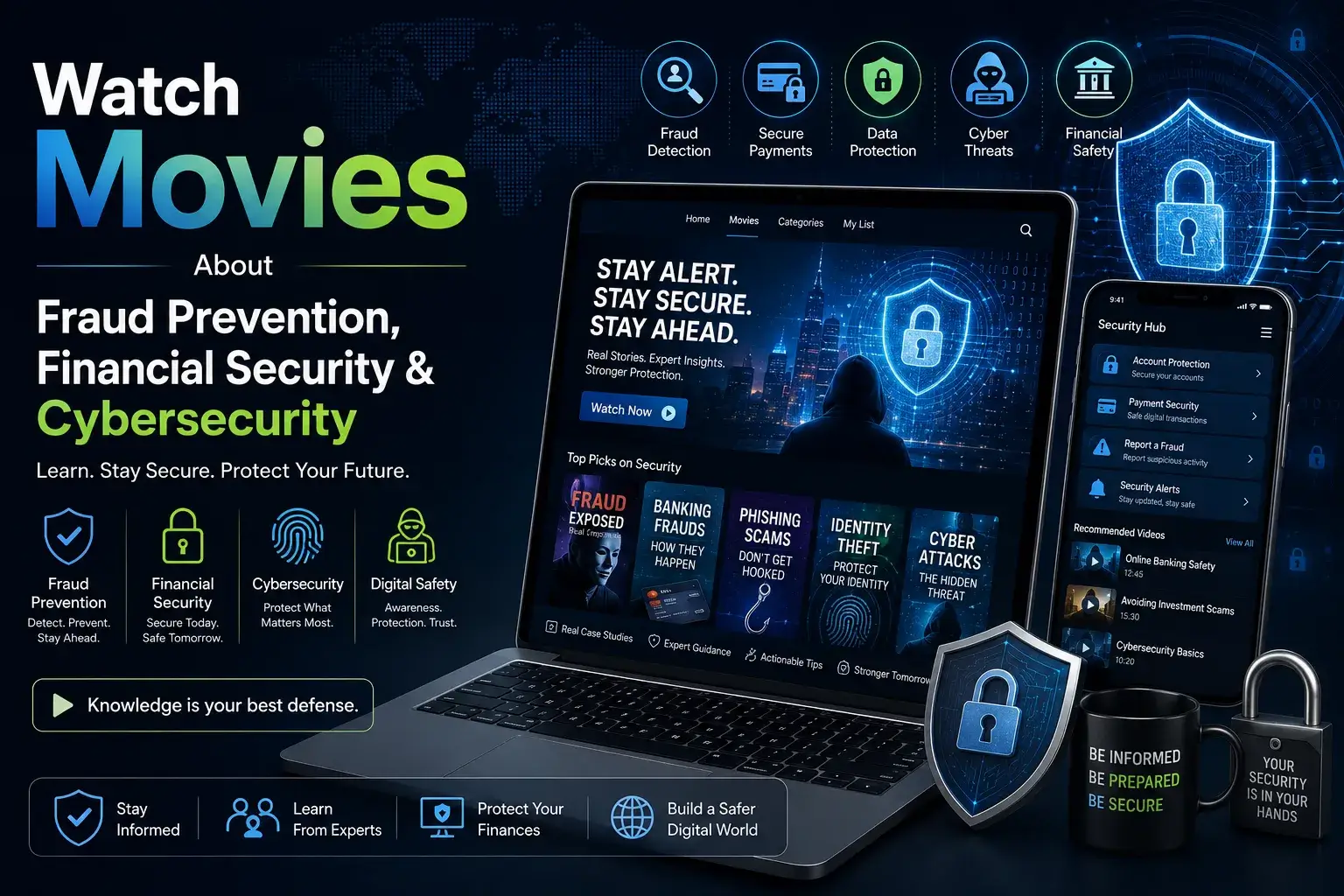
Watch Movies About Fraud Prevention, Financial Security & Cybersecurity
Financial fraud and cybercrime have become increasingly connected to the digital systems used for banking, payments, commerce and financial services. As more transactions move online, organizations need sophisticated fraud detection, identity protection, payment security and cybersecurity technology to protect customers, financial data and business operations.
This collection of fraud prevention movies, financial fraud documentaries and cybersecurity documentaries explores how modern organizations identify suspicious activity, protect digital identities, secure payment systems and manage financial cyber risk.
From banking cybersecurity and transaction monitoring to artificial intelligence, machine learning, identity verification and security analytics, today's financial security environment combines technology, data science and risk management.
Watching educational documentaries about financial security can provide useful context for understanding how fraud works, why digital systems are targeted and how businesses develop layered defenses against financial crime and cyber threats.
What Is Financial Fraud?
Financial fraud generally involves deceptive activity intended to obtain money, financial benefits or other valuable assets through unlawful or dishonest means.
Fraud can occur through traditional channels as well as digital platforms. Online banking, e-commerce, digital payments, investment platforms and financial applications have created new opportunities for legitimate commerce while also creating additional attack surfaces.
Modern fraud prevention therefore requires organizations to combine technology, human oversight, internal controls and effective risk-management processes.
Why Fraud Prevention Matters
Fraud can create direct financial losses and may also result in reputational damage, operational disruption, regulatory exposure and loss of customer trust.
For financial institutions and technology companies, fraud prevention is therefore part of broader financial risk management, cybersecurity and customer protection.
Organizations increasingly use automated systems to identify suspicious transactions and unusual customer behavior before potential losses become significant.
Financial Fraud Documentaries
Financial fraud documentaries can examine major fraud events, investigative techniques, financial controls and the technology used to detect suspicious activity.
Educational content can help viewers understand the relationship between financial crime, corporate governance, cybersecurity and financial regulation.
These documentaries can be particularly useful for students, finance professionals, cybersecurity teams, business owners and anyone interested in financial security.
Fraud Detection Technology
Fraud detection technology uses rules, statistical models, machine learning, behavioral analysis and transaction intelligence to identify potentially suspicious activity.
A modern fraud detection platform may evaluate transaction amount, location, device information, account behavior, transaction history and other signals.
Rather than relying on a single indicator, advanced systems can combine multiple risk signals to calculate a transaction or account risk score.
Real-Time Fraud Detection
Real-time fraud detection evaluates transactions while they are being processed.
This approach is especially important for digital payments because fraudulent transactions can potentially cause losses within seconds.
Real-time monitoring systems can trigger additional authentication, transaction review or other protective controls when suspicious behavior is detected.
Artificial Intelligence and Fraud Prevention
Artificial intelligence is increasingly used in fraud prevention and financial crime analytics.
Machine learning systems can identify patterns across large datasets and detect relationships that may be difficult to identify using simple rules.
AI-based fraud detection can support transaction scoring, anomaly detection, behavioral analysis and investigation workflows.
However, AI systems must be carefully governed because inaccurate models can create false positives or allow sophisticated fraud patterns to go undetected.
Machine Learning Fraud Detection
Machine learning models can analyze historical transaction information to identify patterns associated with suspicious activity.
Models can evaluate many variables simultaneously and continuously improve when appropriately trained and monitored.
Financial institutions need strong data governance, model validation and monitoring processes when deploying machine learning for fraud detection.
Fraud Analytics
Fraud analytics combines transaction data, customer information, behavioral signals and analytical models to identify financial crime risks.
Analytics platforms can help fraud teams investigate suspicious accounts, detect unusual transaction patterns and prioritize alerts.
Advanced fraud analytics is increasingly connected with cybersecurity, identity management and compliance platforms.
Transaction Monitoring
Transaction monitoring involves analyzing financial transactions to identify activity that may require investigation.
Financial institutions may monitor transactions for fraud, money laundering, sanctions concerns or other forms of financial crime depending on their regulatory obligations.
Automated transaction monitoring can process large volumes of financial activity and route higher-risk events to analysts.
Financial Crime Analytics
Financial crime analytics can combine fraud detection, anti-money-laundering monitoring and other risk intelligence into a broader financial crime prevention strategy.
Organizations can use analytics to identify relationships between accounts, transactions, devices and other signals.
This can help investigators understand complex patterns that may span multiple transactions or accounts.
Identity Protection
Digital identity has become an important component of financial security.
Organizations need to verify that customers are legitimate while providing convenient access to digital services.
Identity protection technologies can include authentication, identity verification, device intelligence, biometrics and behavioral analysis.
Identity Theft Prevention
Identity theft occurs when someone obtains and misuses another person's personal information or credentials.
Strong authentication, secure account recovery, monitoring and customer education can help reduce identity-related risks.
Businesses should also minimize unnecessary collection of personal information and protect sensitive data through appropriate security controls.
Identity Verification
Identity verification systems help businesses determine whether a person is who they claim to be.
Financial institutions may use identity verification during account opening, payment authorization and other high-risk activities.
Modern identity verification platforms can combine document verification, biometric checks, database signals and risk analytics.
Digital Identity
Digital identity refers to information and credentials used to represent an individual or organization in digital environments.
Secure digital identity infrastructure can reduce account fraud while improving customer experiences.
Identity technology is particularly important for online banking, digital payments, insurance, lending and financial technology platforms.
Customer Authentication
Authentication determines whether a user is authorized to access an account or perform a specific action.
Traditional password-based authentication is increasingly supplemented with stronger security methods.
Organizations may use multifactor authentication, passkeys, biometric authentication and risk-based authentication depending on their technology environment.
Multifactor Authentication
Multifactor authentication (MFA) requires users to provide more than one authentication factor.
Additional authentication can make compromised passwords less useful to attackers.
MFA is an important component of modern enterprise cybersecurity and financial account protection.
Payment Security
Payment security focuses on protecting financial transactions, payment credentials and payment infrastructure from unauthorized activity.
Digital payment systems must protect sensitive information while maintaining fast and convenient transaction experiences.
Security controls can include encryption, tokenization, authentication, fraud scoring, device intelligence and transaction monitoring.
Payment Fraud Prevention
Payment fraud prevention systems analyze transactions and associated risk signals before authorization or settlement.
Card payments, digital wallets, account-to-account payments and online checkout systems can all require different fraud prevention strategies.
Effective payment security typically combines prevention, detection, authentication and post-transaction investigation.
Card Fraud Prevention
Card fraud prevention systems can evaluate transaction characteristics such as transaction value, merchant category, geographic signals, device information and historical customer behavior.
Risk-based authorization can help payment providers distinguish legitimate transactions from potentially fraudulent activity.
Account Takeover Prevention
Account takeover occurs when an unauthorized person gains access to a legitimate customer account.
Attackers may attempt to obtain passwords, session credentials or other authentication information.
Account takeover prevention can include device intelligence, multifactor authentication, behavioral analytics, login monitoring and adaptive authentication.
Phishing Protection
Phishing attempts to trick users into revealing credentials, payment information or other sensitive data.
Financial institutions and businesses can reduce phishing risk through technical controls, employee training, customer education and strong authentication.
Social Engineering
Social engineering manipulates people into performing actions that compromise security.
Attackers may impersonate employees, financial institutions, customers or trusted service providers.
Security awareness training is therefore an important complement to technical cybersecurity controls.
Cybercrime and Financial Systems
Cybercrime can target banks, payment processors, financial technology companies, retailers and individual customers.
Attackers may attempt to steal credentials, compromise systems, disrupt operations or conduct fraudulent transactions.
Because financial systems are highly interconnected, cybersecurity has become a central component of financial risk management.
Cybersecurity for Financial Institutions
Financial institutions operate highly sensitive technology environments containing financial information, personal data and critical transaction infrastructure.
Banking cybersecurity programs typically use multiple layers of defense covering networks, endpoints, cloud systems, applications, identities and data.
Security teams also monitor systems continuously for suspicious activity and emerging threats.
Enterprise Cybersecurity
Enterprise cybersecurity protects business systems, applications, networks, employees and data from digital threats.
Large organizations typically require security operations, identity management, endpoint protection, cloud security, vulnerability management and incident response.
Cybersecurity should be treated as an ongoing risk-management process rather than a single technology purchase.
Zero Trust Security
Zero Trust is a security approach based on continuously verifying users, devices and access requests rather than automatically trusting activity because it originates inside a corporate network.
Zero Trust principles can help organizations reduce unnecessary access and limit the potential impact of compromised accounts.
Cloud Security
Financial organizations increasingly depend on cloud infrastructure for applications, analytics and digital services.
Cloud security includes identity controls, encryption, configuration management, monitoring, network security and data protection.
Misconfigured cloud resources can create significant security risks, making continuous security monitoring important.
Endpoint Security
Endpoints such as laptops, mobile devices and servers can provide entry points for cyberattacks.
Endpoint security platforms can monitor devices, detect malicious activity and help security teams respond to suspicious behavior.
Financial organizations need endpoint controls that support both security and operational requirements.
Network Security
Network security protects communication infrastructure from unauthorized access and malicious activity.
Modern organizations use firewalls, network monitoring, intrusion detection, segmentation and other controls to protect critical systems.
Network security remains important even as organizations increasingly move workloads to cloud environments.
Data Protection
Financial organizations process sensitive information including customer identity data, account information, transaction records and payment details.
Data protection strategies can include encryption, access control, data loss prevention, secure backups and retention policies.
Strong data governance helps organizations reduce the risk associated with unauthorized access or accidental disclosure.
Financial Data Security
Financial data is a valuable target for cybercriminals.
Organizations must protect data throughout its lifecycle, including collection, processing, storage, transmission and disposal.
Security architecture should account for both internal and external threats.
Ransomware and Financial Risk
Ransomware can disrupt business operations by preventing organizations from accessing systems or data.
Financial institutions and other enterprises need resilient infrastructure, secure backups, network segmentation and incident response plans.
Cyber resilience is an important part of enterprise risk management.
Incident Response
Incident response involves identifying, containing and recovering from cybersecurity incidents.
Well-designed response plans define responsibilities, communication procedures and recovery processes before an incident occurs.
Financial organizations may also need to consider regulatory reporting and customer communication requirements.
Security Operations
Security operations teams continuously monitor technology environments for suspicious activity.
Security information and event management platforms, endpoint detection systems and threat intelligence can help analysts investigate potential incidents.
Automation can improve response speed while allowing security professionals to focus on complex investigations.
Fraud Prevention and Cybersecurity Are Connected
Fraud and cybersecurity were historically treated as separate functions in many organizations.
Today, the distinction is becoming less clear because many fraudulent transactions originate from compromised accounts, stolen credentials or cyber-enabled attacks.
Combining fraud analytics with cybersecurity signals can provide a broader view of customer and transaction risk.
Behavioral Analytics
Behavioral analytics evaluates how users normally interact with applications and services.
Changes in login patterns, device usage, transaction behavior or navigation patterns can indicate potential account compromise.
Behavioral signals can supplement traditional authentication and transaction monitoring.
Risk-Based Authentication
Risk-based authentication adjusts security requirements based on the assessed risk of an activity.
A low-risk login may require normal authentication, while unusual behavior may trigger additional verification.
This approach can balance customer convenience with stronger protection for high-risk activity.
Anti-Money-Laundering Technology
Anti-money-laundering (AML) technology helps financial organizations identify and investigate transactions that may indicate financial crime.
AML systems can use transaction monitoring, customer risk profiles, sanctions screening and investigative workflows.
AML compliance is a major area of financial technology and regulatory technology investment.
KYC Technology
Know Your Customer (KYC) processes help financial institutions understand and verify their customers.
Modern KYC technology can automate parts of identity verification, document analysis and customer risk assessment.
Effective KYC processes help organizations meet regulatory obligations while reducing certain forms of identity-related fraud.
RegTech and Financial Security
RegTech, or regulatory technology, uses software and data analytics to help organizations manage regulatory requirements.
RegTech platforms can support compliance monitoring, identity verification, transaction monitoring and reporting.
The growing complexity of financial regulation is contributing to demand for automated compliance technology.
Financial Risk Management
Financial risk management involves identifying, measuring and controlling risks that can affect an organization.
Fraud risk and cyber risk are increasingly important components of enterprise risk management.
Organizations can use analytics, controls, insurance and cybersecurity technology to reduce their exposure.
Fraud Risk Management
Fraud risk management involves understanding where fraud could occur and implementing controls to reduce the probability and impact of fraudulent activity.
A comprehensive program can include prevention, detection, investigation, recovery and continuous improvement.
Technology provides important capabilities, but governance and employee awareness remain equally important.
Financial Institution Security Technology
Modern financial institutions use a broad technology ecosystem to protect customers and financial infrastructure.
- Fraud detection platforms
- Transaction monitoring systems
- Identity verification technology
- Multifactor authentication
- Security analytics
- Endpoint protection
- Cloud security platforms
- Network security tools
- Threat intelligence
- Security operations platforms
- Data protection systems
- Risk management software
Security Analytics
Security analytics combines data from multiple technology systems to identify suspicious activity.
Analytics platforms can correlate authentication events, network activity, endpoint behavior and application logs.
When combined with fraud analytics, security analytics can help organizations identify coordinated attacks.
Fraud Prevention in Digital Banking
Digital banking has transformed how customers access financial services.
Customers can open accounts, transfer funds and manage financial products without visiting physical branches.
However, digital banking also requires strong identity, authentication and transaction security.
Mobile Banking Security
Mobile banking applications need to protect customer credentials, financial data and transaction functionality.
Security measures can include device binding, application security, authentication controls, encryption and fraud monitoring.
Customers should also keep devices and applications updated and avoid entering sensitive information into suspicious applications or websites.
Online Payment Security
Online payment systems require security throughout the payment lifecycle.
Encryption, tokenization, authentication and fraud monitoring can help protect payment transactions.
Businesses should also maintain secure payment integrations and monitor their systems for suspicious activity.
Financial Technology Security
FinTech companies often operate highly digital business models with APIs, cloud services, mobile applications and automated financial workflows.
Security must therefore be integrated into software development, infrastructure management and customer authentication.
Security-by-design can help FinTech companies build protection into products from the beginning.
Security Awareness
Technology alone cannot eliminate financial fraud or cybercrime.
Employees and customers remain important parts of the security ecosystem.
Security awareness programs can teach users how to identify phishing, protect credentials, recognize suspicious requests and report potential incidents.
Common Warning Signs of Fraud
Although fraud techniques vary, certain warning signals may include unusual account activity, unexpected payment requests, suspicious login attempts or requests for sensitive credentials.
Customers should be cautious when receiving urgent requests for money or authentication information, particularly when the request appears to come from a trusted organization.
The Role of Financial Security Education
Financial security education helps people understand how digital financial systems work and how to protect themselves.
Educational documentaries can provide an engaging way to learn about cybersecurity, fraud detection and financial crime.
Knowledge can complement technical controls by helping individuals make safer decisions online.
How Businesses Can Strengthen Fraud Prevention
Businesses can take a layered approach to fraud prevention.
- Implement strong customer authentication.
- Monitor transactions for unusual behavior.
- Use risk-based fraud detection.
- Protect sensitive customer data.
- Monitor accounts for suspicious activity.
- Train employees against phishing and social engineering.
- Maintain secure software development practices.
- Use appropriate cybersecurity monitoring.
- Regularly review access permissions.
- Maintain tested incident response procedures.
The Future of Fraud Detection
The future of fraud detection is likely to involve greater use of artificial intelligence, machine learning, behavioral analytics and real-time decision systems.
Fraudsters are also becoming more sophisticated, which means security systems must continuously adapt.
Organizations will increasingly need to combine transaction data, identity intelligence, cybersecurity signals and behavioral information to understand risk.
AI-Powered Financial Security
AI can process large volumes of financial and cybersecurity data much faster than manual analysis.
Potential applications include anomaly detection, fraud scoring, alert prioritization and investigation assistance.
Financial institutions must still maintain appropriate governance, model monitoring and human oversight when using AI in high-impact decisions.
The Future of Identity Security
Identity security is moving toward stronger and more convenient authentication technologies.
Passkeys, biometrics, multifactor authentication, device intelligence and risk-based verification may reduce reliance on traditional passwords.
Strong identity infrastructure will remain fundamental to secure digital financial services.
The Future of Payment Security
As payment systems become faster, fraud detection will increasingly need to operate in real time.
Payment providers may combine AI, tokenization, behavioral analytics and identity intelligence to protect transactions without creating unnecessary friction for legitimate customers.
The Future of Financial Cybersecurity
Financial cybersecurity will increasingly integrate with fraud prevention and financial crime management.
Security teams, fraud teams and compliance teams can benefit from sharing relevant intelligence and building coordinated response processes.
This integrated approach can provide stronger protection against complex digital threats.
Why Watch Fraud Prevention and Cybersecurity Documentaries?
Fraud prevention documentaries can help viewers understand how financial crime affects businesses, consumers and financial institutions.
Cybersecurity documentaries can provide historical and technical context around major cyber threats and the evolution of digital security.
Together, these educational resources offer a broader understanding of how technology, finance and security interact.
Explore Financial Security and Cybersecurity
Our collection brings together educational content covering financial fraud, fraud detection, cybersecurity, identity protection, payment security, transaction monitoring, financial risk management and security technology.
Whether you are interested in banking cybersecurity, FinTech security, financial crime analytics, identity theft prevention or enterprise cybersecurity, these topics provide valuable insight into the systems protecting modern digital finance.
Explore documentaries about the evolution of financial crime, the technology used to detect suspicious activity and the cybersecurity strategies designed to protect digital financial infrastructure.
Learn About the Technology Behind Modern Fraud Prevention
Modern fraud prevention is no longer based solely on manual investigation.
Financial institutions and technology companies increasingly use real-time analytics, machine learning, behavioral intelligence, identity verification, transaction monitoring and automated risk scoring.
Understanding these technologies can help professionals appreciate how modern financial security operates across banking, payments, commerce and FinTech.
Financial Security in a Digital Economy
The global economy is increasingly dependent on digital financial infrastructure.
Businesses rely on online payments, cloud platforms, digital banking, financial software and connected systems to operate efficiently.
As digital dependence grows, financial security becomes an essential part of business continuity, customer trust and enterprise risk management.
Fraud prevention and cybersecurity are therefore not simply technical functions. They are strategic business capabilities that support the reliability and integrity of modern financial services.
Watch, Learn and Understand Financial Security
Explore our collection of fraud prevention movies, financial fraud documentaries and cybersecurity documentaries to learn more about financial crime, digital identity, payment security, cyber risk and fraud analytics.
Discover how organizations use cybersecurity software, fraud detection technology, transaction monitoring, identity protection and financial risk management to defend against increasingly sophisticated digital threats.
Whether you are a technology professional, finance professional, business owner, student or simply interested in digital security, these educational resources can help you understand the technology protecting today's financial ecosystem.
Watch, learn and explore the technologies shaping fraud prevention, financial security and cybersecurity.
Educational notice: This content is provided for general educational and informational purposes. It does not constitute financial, investment, cybersecurity, legal, compliance or professional advice. Security threats and regulatory requirements can change over time. Organizations should consult qualified cybersecurity, legal, compliance and financial professionals when making decisions involving financial security or risk management.