If you are looking for a simple, safe and completely free way to enjoy movies and series on your cell phone, tablet or TV, Tubi – Free Movies and Series stands out as one of the best options available in 2026 . With an impressive collection, a clean interface, and support for Portuguese subtitles, the app offers access to thousands of titles free of charge. And best of all, it's available for direct download from the official stores:

Tubi: Free Movies & Live TV
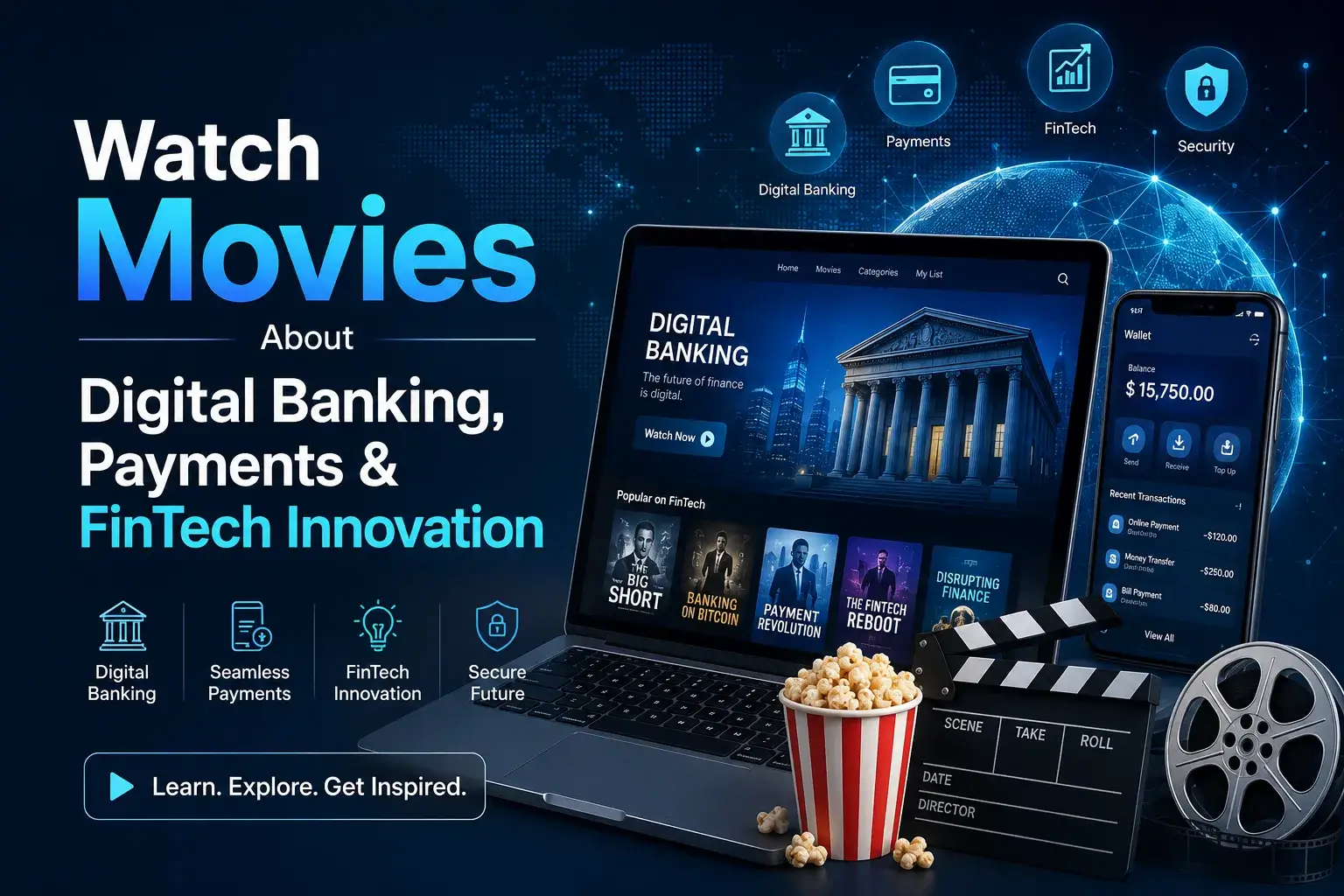
Watch Movies About Digital Banking, Payments & FinTech Innovation
Digital banking and financial technology have transformed the way individuals and businesses manage money. Banking services that once required a physical branch can now be accessed through mobile applications, websites, digital wallets and connected financial platforms.
Our collection of digital banking movies, FinTech documentaries and payment technology videos explores the technologies powering this transformation, including digital payments, online banking, payment processing, mobile wallets, open banking, embedded finance, payment security, banking software, financial APIs, artificial intelligence and modern financial infrastructure.
Behind every digital payment is a complex ecosystem involving banks, payment processors, card networks, merchants, technology providers, regulators and cybersecurity systems. Understanding this infrastructure provides a fascinating view into how money moves through the modern economy.
FinTech documentaries can also demonstrate how technology is changing traditional financial services. From mobile banking and instant payments to cloud-native banking platforms and AI-powered fraud detection, financial technology continues to reshape the global financial industry.
Why Watch Movies About Digital Banking and FinTech?
Financial technology affects almost every modern business. Companies accept online payments, customers use mobile banking applications and consumers increasingly expect financial services to be available instantly.
Digital banking documentaries provide an engaging way to understand these developments without requiring an advanced technical or financial background.
They can explain how payment systems operate, how banks protect accounts, why fraud prevention matters and how new financial platforms are challenging traditional business models.
For technology professionals, these documentaries provide insight into APIs, cloud infrastructure, cybersecurity and software architecture. For business professionals, they demonstrate how payment technology and financial platforms can improve customer experiences and operational efficiency.
What Is Digital Banking?
Digital banking refers to banking services delivered through electronic channels such as websites, mobile applications and other digital platforms.
Customers can often perform activities such as checking balances, transferring money, paying bills, managing accounts and accessing financial information without visiting a physical branch.
Digital banking is not simply a mobile application placed on top of traditional banking infrastructure. Modern digital banks increasingly redesign the underlying technology stack, customer experience and operational processes.
The Evolution of Banking Technology
Banking technology has evolved through several major stages. Traditional banking depended heavily on physical branches and paper-based processes. Automated teller machines expanded access to cash and basic banking services.
Online banking then allowed customers to access accounts through web browsers. Mobile banking extended this capability to smartphones and created new opportunities for real-time notifications, mobile payments and digital identity verification.
Modern banking platforms increasingly use cloud infrastructure, APIs, automation, data analytics and artificial intelligence.
Digital Banking vs Traditional Banking
Traditional banking generally depends more heavily on physical branches and legacy technology systems. Digital banking focuses on delivering financial services through electronic channels.
Traditional institutions are increasingly adopting digital technology, meaning the distinction between traditional banks and digital banks is becoming less clear.
Many established financial institutions now operate sophisticated mobile applications and online platforms alongside their physical branches.
Mobile Banking
Mobile banking has become one of the most important components of digital finance. Smartphones allow customers to manage accounts, transfer funds, receive alerts and access financial services from almost anywhere.
Mobile applications can also integrate biometric authentication, digital identity, real-time notifications and payment functionality.
As mobile banking expands, security becomes increasingly important because smartphones can provide access to sensitive financial information.
Digital Payments
Digital payments allow money to move electronically between customers, merchants, financial institutions and other organizations.
Examples include card payments, bank transfers, mobile payments, digital wallets, online payment gateways and real-time payment systems.
The payment ecosystem operates behind the scenes every time a customer purchases a product online or pays a business through a mobile device.
How Payment Processing Works
Payment processing involves multiple participants. Depending on the transaction type, these can include the customer, merchant, payment gateway, payment processor, financial institution and payment network.
When a payment is initiated, transaction information is securely transmitted for authorization. The relevant financial institutions evaluate the transaction and determine whether it can proceed.
After authorization, settlement processes transfer funds between the appropriate parties.
The complete process can occur within seconds for many modern payment methods, even though numerous systems may participate behind the scenes.
Payment Gateways
Payment gateways provide technology that helps merchants securely submit payment information for processing.
Online businesses depend on reliable payment infrastructure because unsuccessful transactions can directly affect revenue and customer satisfaction.
Modern payment platforms can support multiple payment methods, currencies, fraud controls and integrations through APIs.
Payment Processing Software
Payment processing software manages complex transaction workflows. It can connect merchants with financial institutions and payment networks while providing transaction management, reporting and reconciliation capabilities.
Enterprise payment platforms may also provide fraud detection, tokenization, recurring billing, payment routing and analytics.
Payment software has therefore become a critical component of modern e-commerce and financial infrastructure.
Digital Wallets
Digital wallets allow users to store payment credentials or other financial information electronically and use them for transactions.
Mobile wallets can simplify checkout by reducing the need to manually enter payment information.
Digital wallets may also support loyalty programs, tickets, identity features and other services beyond payments.
Mobile Payments
Mobile payments allow customers to use smartphones or other connected devices to initiate transactions.
Technologies such as near-field communication, QR codes and mobile wallet applications have expanded the range of available payment experiences.
Mobile payment security commonly involves tokenization, device authentication and additional transaction controls.
Contactless Payments
Contactless payment technology allows customers to complete compatible transactions by tapping a card or mobile device against a payment terminal.
The technology has become an important component of modern retail payments because it can make checkout faster and more convenient.
Secure authentication and transaction controls help protect the payment ecosystem.
Real-Time and Instant Payments
Real-time payment systems allow funds to move between financial institutions rapidly, sometimes within seconds.
Instant payment infrastructure can improve cash flow for businesses and provide consumers with faster access to funds.
Real-time payments can also enable new financial products and business models because applications can react to transaction events almost immediately.
Cross-Border Payments
International payments are more complex than domestic transactions because multiple currencies, financial institutions, regulatory requirements and payment networks may be involved.
FinTech companies are developing new technologies designed to make cross-border payments faster, more transparent and more efficient.
Digital payment platforms can provide currency conversion, transaction tracking and automated compliance capabilities.
Payment Orchestration
Payment orchestration platforms help businesses manage multiple payment providers and payment methods through a unified technology layer.
This can allow merchants to route transactions based on factors such as geography, payment method, transaction type or provider performance.
Payment orchestration can also improve resilience by reducing dependence on a single payment provider.
Payment Security
Payment security is essential because digital transactions involve valuable financial information.
Security controls can include encryption, tokenization, authentication, fraud monitoring, transaction limits and secure software architecture.
Financial institutions and payment providers continuously invest in security technology because attackers constantly develop new methods of fraud.
Tokenization in Digital Payments
Tokenization replaces sensitive payment information with a token that can be used within an authorized environment.
This can reduce the exposure of sensitive payment credentials during transactions.
Tokenization is an important technology within modern payment ecosystems and can contribute to stronger payment security when implemented correctly.
Fraud Detection and Financial Crime Prevention
Digital financial services must defend against fraudulent transactions and other forms of financial crime.
Fraud detection systems can analyze transaction characteristics, device information, account behavior and other signals to identify potentially suspicious activity.
Machine learning can help financial institutions process large volumes of transactions and identify unusual patterns.
Fraud prevention must balance security with customer experience because excessive transaction declines can negatively affect legitimate customers.
Artificial Intelligence in Banking
Artificial intelligence is increasingly being used throughout financial services.
AI applications can support fraud detection, customer service, document processing, financial analytics, risk management and personalized digital experiences.
Machine learning models can analyze large datasets and identify patterns that may be difficult to detect using traditional rules alone.
AI systems require appropriate governance because financial decisions can have significant consequences for customers and businesses.
Generative AI in Financial Services
Generative AI can assist financial institutions with document analysis, internal knowledge management, customer support and employee productivity.
AI assistants may help employees find information, summarize financial documents and draft communications.
Because financial institutions manage sensitive data, AI deployments require strong privacy, security and governance controls.
Open Banking
Open banking enables regulated financial data to be shared with authorized third-party providers through secure technology interfaces, subject to applicable laws and customer permissions.
APIs are an important part of open banking because they allow applications to communicate with financial institutions.
Open banking can encourage competition and create new financial products by making it easier for authorized services to interact with financial information.
Banking APIs
Application Programming Interfaces, commonly known as APIs, allow software systems to communicate with each other.
Banking APIs can enable account information services, payment initiation, identity verification and other financial functionality.
APIs are one of the key technologies behind modern financial ecosystems because they allow banks and FinTech companies to build interconnected services.
Embedded Finance
Embedded finance refers to financial services integrated directly into non-financial products and platforms.
For example, a business software platform may provide payments, financing or financial accounts as part of its core experience.
This model can make financial services more convenient by placing them directly within the workflow where customers need them.
Embedded Payments
Embedded payments allow customers to complete transactions without leaving the platform or application they are already using.
This can reduce friction and improve the customer experience.
For businesses, embedded payment infrastructure can also create new revenue opportunities and provide greater control over financial workflows.
Banking as a Service
Banking as a Service, or BaaS, allows technology companies and other organizations to access certain banking capabilities through infrastructure and APIs provided by financial institutions or specialized providers.
BaaS can help businesses build financial products without creating every component of a regulated banking infrastructure from scratch.
The model also creates important responsibilities around compliance, security, consumer protection and financial risk.
Digital Banking Platforms
Modern digital banking platforms can combine account management, payments, cards, financial analytics, customer service and security features.
Cloud-based architecture and APIs can make these platforms easier to integrate with other applications.
Financial institutions increasingly use modular technology to modernize legacy systems and develop new digital services.
Core Banking Software
Core banking systems provide essential infrastructure for managing accounts, balances, transactions and other banking functions.
Legacy core systems can be difficult to replace because they may support critical financial operations.
Modernization projects may involve cloud infrastructure, APIs, microservices and new digital layers built around existing systems.
Cloud Banking
Cloud computing is changing banking infrastructure by providing scalable computing, storage, databases, analytics and security services.
Cloud technology can help financial institutions launch digital products more quickly and improve infrastructure flexibility.
However, cloud adoption requires careful attention to security, regulatory requirements, resilience and vendor management.
Banking Cybersecurity
Financial institutions are high-value targets for cybercriminals because they manage money and sensitive personal information.
Banking cybersecurity can involve identity protection, encryption, endpoint security, network security, fraud monitoring, security operations and incident response.
Modern financial institutions increasingly use layered security architectures rather than relying on a single security mechanism.
Digital Identity and Authentication
Digital identity technology helps financial institutions establish that customers are who they claim to be.
Authentication methods can include passwords, multi-factor authentication, biometrics, device verification and other security controls.
Strong identity management is important because compromised accounts can lead to financial losses and privacy breaches.
KYC and Customer Onboarding
Know Your Customer, commonly known as KYC, involves processes used by financial institutions to establish customer identities and meet applicable regulatory requirements.
Digital onboarding can use identity verification technology, document analysis and automated workflows.
Automation can make account opening faster while helping financial institutions maintain appropriate compliance processes.
AML and Financial Compliance
Anti-Money Laundering, or AML, programs are designed to help financial institutions detect and prevent certain forms of financial crime.
Modern compliance systems can analyze transactions and customer information to identify potentially suspicious activity for further investigation.
Technology can improve the efficiency of compliance operations, although regulatory requirements vary across jurisdictions.
Financial Data Security
Digital financial platforms process sensitive information, making data protection a fundamental requirement.
Security programs can include encryption, access controls, data classification, monitoring, vulnerability management and secure software development.
Financial institutions also need strong third-party risk management because modern financial ecosystems depend on many technology providers.
FinTech and Financial Inclusion
Financial technology can expand access to financial services by reducing the need for physical infrastructure and making certain products available through mobile devices.
Digital accounts, mobile payments and online financial platforms can help connect more people with financial services where appropriate.
Financial inclusion also requires affordability, accessibility, consumer protection and responsible product design.
FinTech for Small Businesses
Small businesses increasingly use FinTech platforms for payment processing, accounting, invoicing, payroll, lending and financial management.
Integrated financial software can reduce administrative work and provide business owners with better visibility into cash flow.
Payment technology can also make it easier for businesses to accept digital transactions from customers across different channels.
Merchant Payment Technology
Merchants depend on payment technology to accept transactions across websites, mobile applications and physical stores.
Modern merchant platforms can support multiple payment methods, recurring billing, fraud detection, transaction analytics and automated reconciliation.
Reliable payment infrastructure is particularly important for e-commerce businesses because payment failures can directly affect conversion rates and revenue.
Payment Analytics
Payment analytics can help businesses understand transaction performance, customer behavior, authorization rates and payment failures.
Analytics platforms can identify patterns and help merchants optimize payment experiences.
For large organizations, payment data can also support forecasting, reconciliation and financial reporting.
Payment Automation
Automation can streamline recurring payments, invoice processing, reconciliation and transaction reporting.
Automated financial workflows can reduce manual data entry and help businesses process large transaction volumes efficiently.
Automation should still include appropriate controls, monitoring and exception handling to reduce operational risk.
Digital Banking for Businesses
Business banking is increasingly becoming digital. Companies can manage accounts, initiate payments, monitor transactions and integrate banking services with accounting and enterprise software.
Banking APIs can enable direct connections between financial institutions and business applications.
This integration can improve financial visibility and reduce manual administrative work.
Embedded Finance for Businesses
Embedded financial services are becoming increasingly important in business software.
Accounting, commerce, marketplaces and enterprise platforms can integrate payments, lending, insurance or financial accounts directly into their workflows.
This creates a closer relationship between software and financial services and can create new business models.
FinTech and E-Commerce
E-commerce depends heavily on financial technology. Online stores need secure payment gateways, fraud detection, recurring billing, refunds, transaction reporting and international payment capabilities.
FinTech providers help businesses manage these requirements through APIs and integrated payment platforms.
As global e-commerce expands, payment technology will continue to play an important role in digital commerce.
Cross-Border FinTech
FinTech platforms are increasingly connecting financial systems across countries.
Cross-border payment solutions can help businesses receive international payments, manage currency conversion and track transactions.
International financial technology must account for different regulations, currencies, payment systems and compliance requirements.
Financial Technology and Automation
Automation is changing many financial workflows. Digital onboarding, payment processing, fraud detection, reconciliation and customer support can all involve automated systems.
Robotic process automation and intelligent automation can reduce repetitive administrative work.
AI can further enhance these workflows by processing unstructured information and identifying patterns.
FinTech Cloud Infrastructure
Cloud infrastructure allows FinTech companies to build scalable applications without owning all of the underlying physical infrastructure.
Cloud services can provide databases, networking, analytics, security and AI capabilities through managed platforms.
FinTech companies must carefully evaluate security, resilience, compliance and data protection when using cloud services.
FinTech Software Development
Financial applications require high standards of reliability and security.
Developers working on financial platforms may use APIs, microservices, cloud infrastructure, automated testing, encryption and secure development practices.
Software quality is particularly important because failures in financial applications can affect transactions and customer funds.
Real-Time Financial Analytics
Modern financial systems increasingly process data in real time. Real-time analytics can support fraud detection, payment monitoring, customer notifications and financial decision-making.
Streaming technologies allow financial platforms to process transaction events as they occur.
This capability can improve responsiveness and create new opportunities for automated financial services.
Machine Learning in Payments
Machine learning can analyze transaction patterns and identify anomalies that may indicate fraud or other unusual activity.
Models can process large numbers of transactions and continuously improve when appropriately trained and monitored.
Financial institutions must consider model accuracy, false positives, explainability, privacy and governance when deploying machine learning systems.
FinTech Regulation
Financial services are highly regulated in many markets because failures can affect consumers and broader financial stability.
FinTech companies may need to address requirements involving licensing, consumer protection, privacy, cybersecurity, financial crime prevention and reporting.
Technology can support compliance, but businesses should obtain appropriate professional and legal advice for specific regulatory requirements.
Digital Banking Customer Experience
Customers increasingly expect financial applications to be simple, fast and available at any time.
Modern banking interfaces can provide instant notifications, biometric login, financial dashboards and automated customer support.
Good digital banking design must balance convenience with security. Strong security controls should operate in ways that minimize unnecessary friction for legitimate customers.
Personalized Financial Services
Data analytics and AI can help financial institutions understand customer behavior and provide more personalized experiences.
Potential applications include personalized financial insights, spending analysis, product recommendations and automated support.
Personalization should be implemented responsibly with appropriate privacy protections and transparency.
Digital Finance and the Future of Money
The growth of digital banking and payments raises broader questions about how money will be stored, transferred and managed in the future.
Financial services are increasingly becoming software-driven, integrated and available through digital platforms.
The future may involve greater use of real-time payments, embedded finance, AI-powered financial services and interconnected banking ecosystems.
How FinTech Is Changing Traditional Banks
Traditional financial institutions face competition and collaboration opportunities from FinTech companies.
Banks may partner with technology companies to provide new digital services, while FinTech companies may use banking infrastructure to build specialized customer experiences.
This relationship is creating a financial ecosystem where traditional institutions and technology companies increasingly depend on one another.
Digital Banking Careers
The FinTech industry creates opportunities across software engineering, cybersecurity, data science, financial analysis, product management, compliance and risk management.
Professionals who understand both financial services and technology can be particularly valuable as banks modernize their infrastructure.
Important technical skills can include cloud computing, APIs, cybersecurity, data analytics, artificial intelligence and secure software development.
FinTech Education for Students
Students interested in finance and technology can use FinTech documentaries as an introduction to digital payments, banking infrastructure, financial markets and software-driven financial services.
Learning basic programming, databases, APIs, cybersecurity, statistics and financial concepts can provide a strong foundation for exploring FinTech.
Building simple payment simulations or financial dashboards can also provide practical experience with technology concepts.
Important Digital Banking and FinTech Topics to Explore
- Digital Banking: Learn how financial services are delivered through online and mobile platforms.
- Payment Technology: Explore the infrastructure behind digital transactions.
- Digital Wallets: Understand mobile and electronic payment wallets.
- Payment Processing: Discover how transactions move through financial networks.
- Payment Security: Explore encryption, tokenization and transaction protection.
- Open Banking: Learn how APIs connect authorized financial services.
- Embedded Finance: Explore financial services integrated into non-financial platforms.
- Banking APIs: Understand how software systems communicate with financial institutions.
- Fraud Detection: Learn how analytics and AI can identify suspicious activity.
- Digital Identity: Explore authentication and identity verification technology.
- Cloud Banking: Discover how cloud infrastructure supports modern financial platforms.
- AI in Finance: Explore artificial intelligence and machine learning applications.
- Financial Compliance: Understand technology supporting KYC, AML and regulatory operations.
- Real-Time Payments: Learn how modern payment systems move funds rapidly.
- FinTech Software: Explore the technology platforms powering digital financial services.
- Financial Data Security: Understand how sensitive financial information is protected.
The Future of Digital Payments
Digital payments are likely to become increasingly integrated into everyday products and services.
Real-time payment infrastructure, digital wallets, embedded payments and API-based financial services can create faster and more convenient transaction experiences.
Payment platforms may increasingly use AI and analytics to optimize routing, detect fraud and improve transaction authorization.
Security will remain essential as payment volumes and digital financial activity continue to grow.
The Future of Digital Banking
Digital banking is likely to become increasingly intelligent and interconnected.
AI assistants may help customers understand financial information, while automated systems may provide personalized insights and support.
Open banking APIs can enable financial applications to work together, creating more connected financial ecosystems.
Cloud infrastructure can provide the scalability required to support these services.
The Future of FinTech Innovation
FinTech innovation is likely to continue across payments, lending, banking, insurance, wealth management, financial analytics and compliance.
The most important developments may not always be visible to customers. Behind the interface, improvements in APIs, cloud infrastructure, cybersecurity, AI and payment processing can significantly change how financial services operate.
Successful FinTech products will need to combine convenience with reliability, security, regulatory compliance and customer trust.
How to Get More Value From FinTech Documentaries
When watching a digital banking or FinTech documentary, consider what happens behind the user interface.
Ask how a payment is authorized, how financial data is protected, how fraud is detected and how different financial institutions communicate.
Also consider the business model. How does the platform generate revenue? Which technology infrastructure does it depend on? What regulatory obligations does it face?
These questions can turn a FinTech movie into an educational exploration of technology, finance and business strategy.
Explore Digital Banking Movies and FinTech Documentaries
Digital banking and FinTech documentaries provide a fascinating look at the technology transforming the global financial system.
From mobile payments and digital wallets to open banking, embedded finance and AI-powered financial platforms, technology is changing how money moves and how financial services are delivered.
These documentaries can help viewers understand the infrastructure behind everyday transactions while exploring the business and technology trends shaping the future of finance.
Start Exploring Digital Banking and Financial Technology
Explore our collection of digital banking movies, FinTech documentaries and payment technology videos covering online banking, digital payments, payment processing, mobile wallets, payment security, banking APIs, open banking, embedded finance, financial software, fraud prevention and digital transformation.
Whether you are a banking professional, FinTech entrepreneur, software developer, cybersecurity specialist, business owner, student or technology enthusiast, these videos provide an engaging starting point for understanding the rapidly evolving financial technology industry.
Use FinTech documentaries as an educational resource and verify important financial, legal, regulatory and security information through current authoritative sources and qualified professionals.
Watch, learn and explore how digital banking, payment technology and FinTech innovation are transforming the future of finance.