If you are looking for a simple, safe and completely free way to enjoy movies and series on your cell phone, tablet or TV, Tubi – Free Movies and Series stands out as one of the best options available in 2026 . With an impressive collection, a clean interface, and support for Portuguese subtitles, the app offers access to thousands of titles free of charge. And best of all, it's available for direct download from the official stores:

Tubi: Free Movies & Live TV
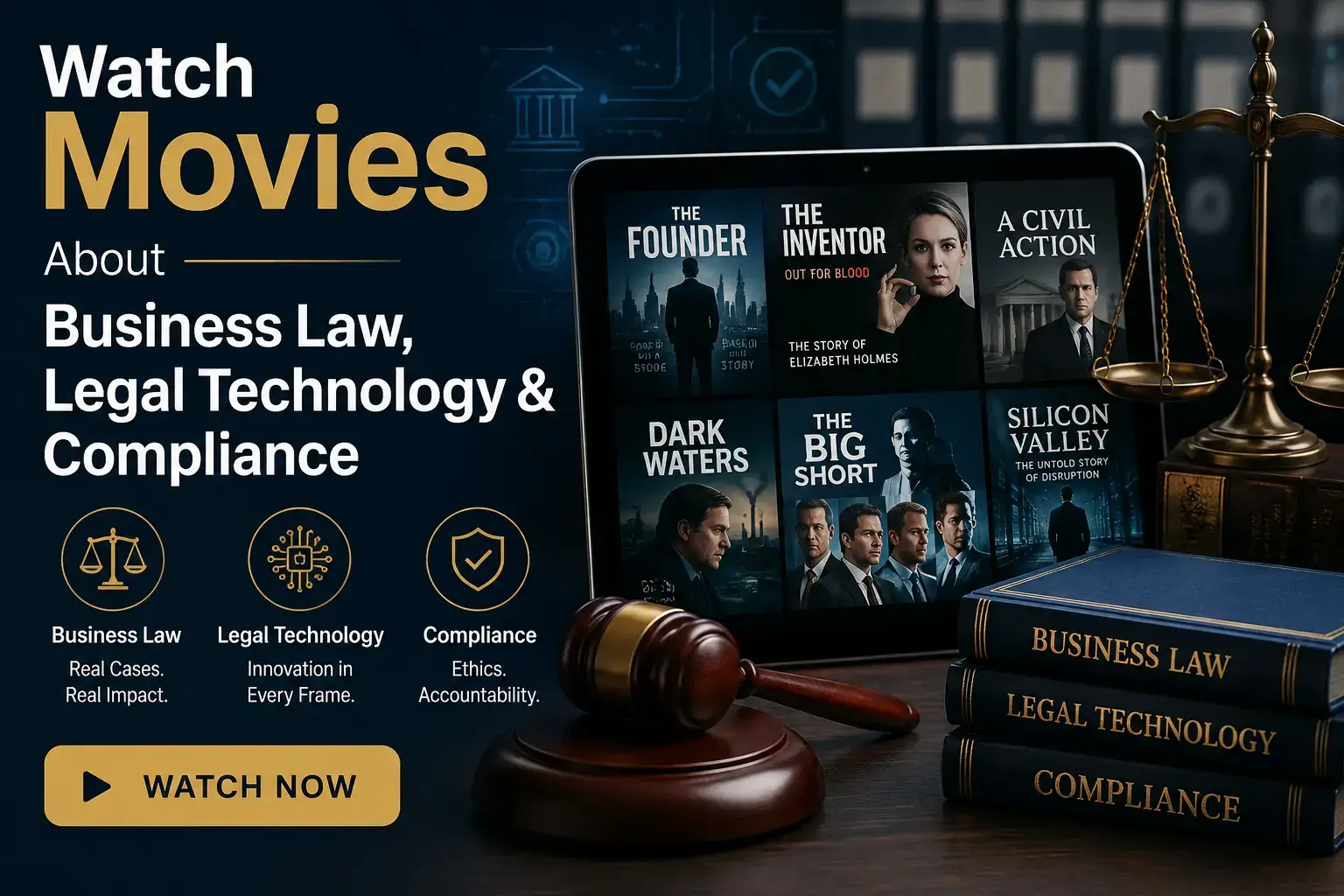
Watch Movies About Business Law, Legal Technology & Compliance
Modern businesses operate within an increasingly complex legal and regulatory environment. Companies must manage contracts, protect intellectual property, safeguard customer information, comply with industry regulations, maintain corporate governance standards and respond to evolving cybersecurity and privacy requirements.
This collection of business law movies, legal documentaries and legal technology videos explores the systems that help organizations understand and manage these challenges. Discover educational content covering corporate law, contract management, regulatory compliance, legal operations, privacy, cybersecurity law, corporate governance and emerging legal technology.
Legal technology is also changing how companies manage legal work. Cloud-based legal software, contract lifecycle management platforms, compliance automation, artificial intelligence, legal analytics and enterprise governance systems are helping organizations organize information and automate repetitive processes.
Whether you are interested in corporate law, legal operations, compliance technology, contract software, privacy law or cybersecurity regulations, documentaries and educational videos can provide a useful introduction to the business and technology systems behind modern legal operations.
Why Business Law Matters
Business law establishes many of the rules under which companies operate. It can influence how businesses are formed, how contracts are created, how employees are managed, how intellectual property is protected and how organizations interact with customers, suppliers and regulators.
Understanding business law can help business professionals recognize legal risks and appreciate why organizations invest in legal departments, compliance teams, governance programs and specialized technology.
The specific laws that apply to a company depend on its industry, location, corporate structure and activities. Legal requirements can also change as regulations and court decisions evolve.
What Is Corporate Law?
Corporate law deals with the formation, governance, financing and operation of companies.
Corporate legal matters can include company formation, shareholder rights, board responsibilities, corporate transactions, mergers and acquisitions, securities requirements and corporate governance.
Large organizations may have dedicated corporate legal teams that work closely with executives, boards, finance departments and compliance professionals.
Corporate Governance
Corporate governance refers to the systems and processes through which organizations are directed and overseen.
Governance can involve boards of directors, executive responsibilities, shareholder interests, internal controls, ethics programs and reporting requirements.
Strong governance can help organizations establish accountability and manage legal, financial and operational risks.
Corporate Governance Technology
Technology is increasingly used to support corporate governance.
Board management platforms can organize meeting materials, resolutions, minutes, policies and governance records in centralized environments.
These systems can improve document organization and provide authorized users with secure access to important corporate information.
Business Contracts
Contracts are fundamental to commercial activity. Companies use agreements with customers, suppliers, employees, partners, technology providers, landlords and other organizations.
Commercial contracts can define responsibilities, payment terms, service levels, warranties, intellectual property rights, confidentiality requirements and termination conditions.
Because contracts can create significant financial and legal obligations, businesses often use legal professionals and contract management systems to review and monitor them.
Contract Management
Contract management involves organizing, negotiating, executing and monitoring agreements throughout their lifecycle.
Organizations may need to track renewal dates, payment obligations, contract owners, service levels, compliance requirements and important clauses.
Contract management software can centralize these details and reduce reliance on spreadsheets and manual processes.
Contract Lifecycle Management
Contract lifecycle management, often called CLM, covers the stages of a contract from initial request and drafting through negotiation, approval, signature, performance and renewal or termination.
CLM platforms can provide workflow automation, templates, approval processes, electronic signatures, clause libraries and contract analytics.
For organizations managing thousands of agreements, centralized contract data can improve visibility into commercial and legal obligations.
Contract Software
Modern contract software can support legal teams, procurement departments, sales organizations and business executives.
Common capabilities include document generation, automated approval workflows, version control, clause management, electronic signatures, obligation tracking and reporting.
Advanced platforms can also use artificial intelligence to identify clauses and extract structured information from contracts.
Contract Automation
Contract automation can reduce repetitive work involved in creating and processing standard agreements.
Businesses may use templates, automated workflows and predefined approval rules for frequently used contracts.
Automation can help legal teams spend more time on complex negotiations and higher-risk matters.
Electronic Signatures
Electronic signature technology allows parties to sign many types of business documents digitally, subject to applicable laws and requirements.
Digital signing can simplify contract execution and reduce administrative delays.
Organizations should select electronic-signature solutions that provide appropriate security, authentication, audit trails and compliance capabilities for their use case.
Legal Technology
Legal technology, often referred to as LegalTech, includes software and digital tools designed to support legal professionals and business legal operations.
The category includes contract management, legal research, document management, eDiscovery, litigation management, compliance software, legal billing and artificial intelligence applications.
Legal technology is becoming increasingly integrated with broader enterprise software systems.
Legal Operations
Legal operations focuses on improving the efficiency, organization and performance of corporate legal departments.
Legal operations teams may manage technology, budgets, outside counsel relationships, legal spend, processes, data and performance reporting.
Modern legal operations increasingly resemble other enterprise functions by using analytics, automation and centralized technology platforms.
Enterprise Legal Management
Enterprise legal management platforms can provide centralized systems for managing legal matters, contracts, legal spend, outside counsel and compliance activities.
These platforms can help large organizations gain visibility across geographically distributed legal teams.
Integration with finance, procurement, HR and security systems can further improve operational visibility.
Legal Document Management
Legal departments handle large volumes of sensitive documents.
Document management systems can provide controlled storage, search, permissions, version tracking and retention capabilities.
Secure document management is particularly important when legal records contain confidential business information, intellectual property or personal data.
eDiscovery Technology
eDiscovery technology supports the identification, collection, processing, review and analysis of electronically stored information in legal matters.
Modern eDiscovery platforms can process large document collections and provide search, classification and review capabilities.
Automation and machine learning can assist legal teams with document review, although appropriate human oversight remains important.
Legal Analytics
Legal analytics uses data to identify patterns in legal matters, contracts, litigation, legal spending and regulatory activity.
Analytics can help organizations understand legal workloads, identify recurring risks and evaluate operational performance.
Data-driven legal operations can support better allocation of resources and more informed decision-making.
Artificial Intelligence in Legal Technology
Artificial intelligence is rapidly becoming an important component of legal technology.
AI systems can assist with document classification, contract analysis, legal research, summarization, information extraction and workflow automation.
Organizations adopting legal AI should consider accuracy, confidentiality, security, intellectual property, data governance and human review.
AI Contract Analysis
AI-powered contract analysis can identify specific clauses, obligations, dates, risks and deviations from approved templates.
This can help legal and procurement teams review large contract collections more efficiently.
AI-generated analysis should be validated by qualified professionals when legal consequences are involved.
Legal Research Technology
Legal research software helps professionals locate statutes, regulations, court decisions and other legal materials.
Modern platforms can use advanced search, natural language processing and AI-assisted research features to improve information discovery.
Legal research requires careful verification because incorrect or outdated information can create significant legal risk.
Business Compliance
Business compliance involves following laws, regulations, contractual obligations and internal policies applicable to an organization.
Compliance requirements vary considerably between industries.
Financial institutions, healthcare companies, technology providers, manufacturers and public companies can face very different regulatory obligations.
Regulatory Compliance
Regulatory compliance requires organizations to understand and follow applicable government rules and industry requirements.
Compliance programs can include policies, controls, employee training, monitoring, audits, reporting and corrective actions.
Technology can help organizations manage these processes at scale.
Compliance Management Software
Compliance management software can centralize policies, controls, assessments, evidence, regulatory requirements and compliance tasks.
Organizations can use these systems to assign responsibilities, monitor deadlines and generate reports.
Automated workflows can improve consistency across large compliance programs.
Governance, Risk and Compliance
Governance, Risk and Compliance (GRC) platforms connect organizational governance, risk management and compliance activities.
GRC software can help companies map controls to requirements, monitor risks, document evidence and coordinate compliance activities.
For large enterprises, GRC platforms can provide a centralized view of business and regulatory risk.
RegTech
RegTech, or regulatory technology, refers to technology designed to help organizations manage regulatory requirements.
RegTech applications can support monitoring, reporting, identity verification, risk assessment, transaction monitoring and regulatory workflows.
The growth of digital financial services has increased demand for technology that can manage complex regulatory environments efficiently.
Privacy Law
Privacy law governs how organizations collect, use, store, share and protect personal information.
Businesses increasingly need privacy programs because customer and employee data can move across cloud applications, analytics platforms, websites and third-party services.
Privacy requirements differ by jurisdiction, so organizations should understand the laws that apply to their operations.
Data Protection
Data protection programs focus on safeguarding personal and sensitive information throughout its lifecycle.
Organizations may establish controls covering data collection, access, storage, retention, deletion and third-party sharing.
Privacy and security teams often work together because unauthorized access to personal information can create legal and operational consequences.
Privacy Compliance Technology
Privacy management platforms can help organizations maintain data inventories, manage privacy requests, document processing activities and monitor compliance obligations.
Automation can make privacy programs more manageable as organizations process increasing volumes of personal data.
Cybersecurity Law
Cybersecurity law covers legal and regulatory issues associated with protecting information systems and responding to digital threats.
Organizations can face requirements involving security controls, breach notification, incident response, data protection and industry-specific cybersecurity standards.
Legal and cybersecurity teams increasingly work together to prepare for security incidents.
Cybersecurity Compliance
Cybersecurity compliance involves meeting applicable security requirements and demonstrating that appropriate controls are in place.
Organizations may use security frameworks, audits, risk assessments and compliance software to manage these requirements.
Security compliance is not identical to cybersecurity. Compliance establishes requirements, while security programs must continuously manage actual threats and vulnerabilities.
Cyber Incident Response and Legal Risk
A cybersecurity incident can create technical, financial, operational and legal consequences.
Organizations often need coordinated processes involving security teams, legal counsel, executives, communications teams and external specialists.
Incident response planning can help organizations respond more effectively when an incident occurs.
Intellectual Property Law
Intellectual property law protects certain creations and business assets, including inventions, trademarks, creative works and confidential information.
For technology companies, intellectual property can represent a major component of enterprise value.
Legal teams help organizations identify, protect and manage intellectual property rights.
Software Licensing
Software licensing defines how software can be used, distributed or modified under applicable agreements.
Businesses often need to track commercial software licenses, open-source obligations and SaaS agreements.
Software asset management systems can help organizations maintain visibility into technology contracts and licensing requirements.
SaaS Contracts
Software-as-a-Service agreements can define subscription terms, service levels, data processing responsibilities, security requirements, support obligations and termination rights.
Legal and procurement teams may review SaaS contracts to understand commercial and operational risks.
Business Regulations
Businesses can be subject to regulations covering employment, taxation, consumer protection, competition, privacy, cybersecurity, financial services, environmental requirements and industry-specific activities.
Regulatory complexity often increases as companies expand into new countries or industries.
Compliance technology can help organizations track requirements and assign responsibility for regulatory obligations.
Financial Compliance
Financial institutions and businesses operating in regulated financial markets can face extensive compliance requirements.
Financial compliance programs may cover customer identification, transaction monitoring, financial reporting, risk management and other regulatory obligations.
Specialized compliance software can automate portions of these processes.
AML Compliance
Anti-Money Laundering (AML) programs are designed to help organizations identify and prevent certain financial crime risks.
Technology can support customer screening, transaction monitoring, risk scoring and compliance reporting.
Organizations operating under AML requirements must follow the rules applicable to their jurisdiction and industry.
KYC Technology
Know Your Customer (KYC) processes help regulated organizations verify customer identities and assess relevant risks.
Digital identity verification platforms can automate parts of customer onboarding and document verification.
Identity technology must be designed with security, privacy and applicable regulatory requirements in mind.
Third-Party Risk Management
Companies increasingly rely on external vendors, cloud providers, software platforms and service providers.
Third-party risk management helps organizations evaluate the security, financial, operational and compliance risks associated with these relationships.
Vendor risk platforms can centralize assessments, documentation and remediation workflows.
Vendor Compliance
Organizations may require vendors to meet contractual security, privacy and compliance standards.
Vendor management software can track certifications, assessments, contracts and renewal dates.
Strong vendor governance becomes particularly important when third parties have access to sensitive company or customer data.
Legal Risk Management
Legal risk management involves identifying and reducing risks associated with laws, contracts, disputes and regulatory obligations.
Legal departments can use technology to monitor contracts, deadlines, litigation matters and regulatory requirements.
Early identification of legal risk can help organizations make more informed business decisions.
Compliance Monitoring
Compliance monitoring involves evaluating whether organizational activities continue to meet applicable requirements.
Automated monitoring systems can generate alerts when certain conditions occur or when compliance tasks become due.
Monitoring should be supported by appropriate policies, controls and human review.
Policy Management
Organizations maintain policies covering areas such as cybersecurity, privacy, employee conduct, financial controls and regulatory compliance.
Policy management software can help distribute policies, track employee acknowledgments and manage review cycles.
Compliance Training
Employees play an important role in business compliance.
Training programs can educate employees about cybersecurity, privacy, ethical conduct, conflicts of interest, data handling and other organizational requirements.
Digital learning platforms can automate training assignments, reminders and completion reporting.
Audit Management Technology
Audit management platforms help organizations coordinate internal audits, evidence collection, findings and remediation.
Centralized audit records can improve visibility into control effectiveness and outstanding issues.
Legal Spend Management
Corporate legal departments may spend significant amounts on outside counsel and specialized legal services.
Legal spend management software can help organizations track invoices, budgets, matter costs and outside counsel performance.
Analytics can provide legal leaders with greater visibility into spending patterns.
Litigation Management
Litigation management systems can help legal teams organize cases, documents, deadlines, legal expenses and communications.
Centralized systems can reduce administrative complexity when organizations manage large numbers of legal matters.
Legal Technology and Cloud Computing
Cloud-based legal software has made it easier for distributed legal teams to access information from different locations.
Cloud platforms can provide scalability and collaboration while reducing the need for organizations to maintain traditional on-premises infrastructure.
Security architecture, access controls, encryption and vendor due diligence remain essential when sensitive legal information is stored in the cloud.
Legal Technology and Cybersecurity
Legal departments are attractive targets for cybercriminals because they may hold confidential contracts, intellectual property, litigation documents and strategic business information.
Legal technology systems should therefore include strong authentication, access controls, logging, backup strategies and appropriate security monitoring.
Data Governance for Legal Departments
Data governance establishes how information is classified, accessed, stored, retained and managed.
Legal teams can benefit from data governance because they handle information subject to confidentiality, retention and regulatory requirements.
Good governance can also improve the quality of legal analytics and AI applications.
AI Governance
As businesses adopt artificial intelligence, new legal and compliance questions are emerging.
Organizations may need policies addressing AI usage, confidential information, intellectual property, model risk, transparency, security and regulatory requirements.
AI governance programs can help companies establish responsible processes for adopting AI technologies.
Legal Technology for Enterprise Businesses
Large organizations often have thousands of contracts, multiple regulatory requirements and legal matters distributed across business units and countries.
Enterprise legal technology can centralize this information and connect legal operations with procurement, finance, security and compliance teams.
Integrated systems can provide executives with better visibility into legal and regulatory exposure.
Legal Technology Trends
Several trends are shaping the future of legal technology:
- Artificial intelligence for legal research and document analysis
- Automated contract review and generation
- Cloud-based enterprise legal management
- Compliance workflow automation
- Privacy management platforms
- RegTech and regulatory monitoring
- Legal analytics and predictive reporting
- Digital signatures and electronic contracts
- Automated legal operations
- Integrated governance, risk and compliance platforms
- Advanced cybersecurity for legal information
The Business Value of Legal Automation
Legal automation can reduce repetitive administrative work and improve the consistency of common workflows.
Automated contract generation, approval routing, compliance reminders and document classification can allow legal professionals to focus on higher-value work.
Automation should be implemented carefully, particularly when workflows involve complex legal judgments.
Why Legal and Compliance Teams Need Better Data
Legal and compliance decisions increasingly depend on large amounts of information.
Organizations need visibility into contracts, policies, regulatory requirements, third-party relationships, security controls and legal matters.
Centralized data platforms can reduce information silos and support better decision-making.
The Future of Business Law
The future of business law will increasingly involve technology, data and automation.
Legal professionals will continue to provide expertise and judgment while software handles more repetitive information-processing tasks.
AI may change how legal research, contract review and document analysis are performed, but accuracy, confidentiality, accountability and professional oversight will remain important.
The Future of Compliance Technology
Compliance platforms are becoming more automated and integrated with enterprise systems.
Future compliance technology may continuously monitor business activity, identify potential issues and connect regulatory requirements with internal controls.
This can move compliance programs toward more proactive risk management rather than purely periodic reviews.
The Future of Corporate Governance
Corporate governance technology can provide boards and executives with more structured access to information.
Digital board portals, governance analytics and automated reporting can make governance processes more efficient.
However, technology should support rather than replace the responsibilities of directors, executives and legal professionals.
The Future of Contract Management
Contract management is likely to become increasingly automated and data-driven.
AI-assisted contract review, automated obligation tracking and integrated procurement workflows can improve visibility throughout the contract lifecycle.
Businesses may increasingly treat contracts as structured business data rather than static documents.
How to Learn Business Law Through Documentaries
Start with documentaries covering corporate structures, business regulations and major legal cases.
Then explore specialized subjects such as contract management, corporate governance, privacy, cybersecurity law and compliance technology.
Combining documentaries with reputable legal education resources can provide a broader understanding of how legal systems interact with modern businesses.
Key Business Law and Legal Technology Topics
| Topic | What It Covers | Technology Examples |
|---|---|---|
| Corporate Law | Company formation, governance and transactions | Corporate management platforms |
| Contract Management | Creation, negotiation and monitoring of agreements | CLM and contract automation |
| Compliance | Regulatory and internal requirements | Compliance management software |
| Privacy | Personal data governance and protection | Privacy management platforms |
| Cybersecurity Law | Legal obligations related to information security | GRC and security compliance platforms |
| Legal Operations | Efficiency and management of corporate legal departments | Enterprise legal management |
| Legal Research | Finding and analyzing legal information | Legal research platforms and AI |
| eDiscovery | Electronic information for legal matters | eDiscovery and document review software |
| Corporate Governance | Board and organizational oversight | Board management software |
| RegTech | Technology for regulatory requirements | Regulatory monitoring and reporting platforms |
Why Legal Technology Is Becoming a Strategic Business Function
Legal technology is no longer limited to document storage or basic workflow management. Modern legal platforms can connect contracts, compliance, financial information, business operations and risk data.
This creates an opportunity for legal departments to become more strategic business partners.
When legal information is structured and accessible, executives can better understand contractual obligations, regulatory exposure and potential business risks.
Business Law, Compliance and Digital Transformation
Digital transformation affects almost every part of an organization, including legal and compliance operations.
Businesses adopting cloud applications, AI, digital payments and connected systems create new legal and regulatory considerations.
Legal teams therefore increasingly participate in technology procurement, cybersecurity planning, privacy programs, AI governance and digital transformation projects.
Why Businesses Invest in Compliance Software
Manual compliance processes can become difficult to manage as organizations grow.
Compliance software can centralize policies, controls, assessments, evidence, training and regulatory requirements.
Automation can also improve accountability by assigning tasks and providing management dashboards.
Legal Technology for Small and Medium Businesses
Legal technology is not only relevant to large enterprises.
Small and medium-sized businesses can use contract templates, electronic signatures, document management, compliance checklists and cloud-based legal services to improve operational efficiency.
Technology can help smaller businesses establish more structured legal processes without building large internal departments.
Choosing Legal Technology
Organizations evaluating legal technology should consider functionality, security, integrations, data governance, usability, scalability and total cost of ownership.
Businesses should also determine whether a platform meets the legal and regulatory requirements relevant to their industry and geographic markets.
What to Look for in Legal Software
- Secure cloud infrastructure
- Role-based access controls
- Audit trails
- Workflow automation
- Document management
- Contract analytics
- Reporting and dashboards
- API and enterprise integrations
- Data export capabilities
- Compliance and security documentation
- Scalable architecture
Understanding Legal and Regulatory Risk
Legal and regulatory risk can arise from contracts, business practices, data handling, employee activities, third-party relationships and changes in applicable regulations.
Effective risk management requires organizations to identify important risks, establish appropriate controls and continuously monitor changes.
Technology can support this process by connecting risk information with compliance and business workflows.
Watch, Learn and Explore Business Law
Our collection of business law movies, legal documentaries and legal technology videos provides an educational way to explore the legal infrastructure behind modern commerce.
Discover topics ranging from corporate law and contracts to privacy, cybersecurity, compliance software, legal AI, regulatory technology and corporate governance.
These subjects demonstrate how law and technology increasingly work together to help businesses manage risk, protect information and operate efficiently.
Explore the Future of Legal Technology and Compliance
Business law is evolving alongside technology. Cloud computing, artificial intelligence, digital contracts, cybersecurity, data privacy and regulatory technology are changing the way companies manage legal and compliance responsibilities.
At the same time, the fundamentals of responsible business remain important: clear contracts, sound governance, appropriate controls, ethical conduct, privacy protection and compliance with applicable laws.
Explore documentaries and educational videos to understand these topics and discover how LegalTech, RegTech, contract automation, compliance software, AI and enterprise legal management are shaping the future of business law.
Watch, learn and explore the legal systems, technologies and compliance strategies shaping modern business.
Educational notice: This content is provided for general educational and informational purposes only. It does not constitute legal, regulatory, financial, tax or professional advice. Laws and regulations vary by jurisdiction and can change over time. Consult a qualified legal or compliance professional for advice relating to a specific business, transaction, contract or regulatory requirement.